- Surface cleaning
The first thing you have to do is to clean the surface to avoid pebbles under the lawn, as they can be very annoying and once the lawn is installed it will be very difficult to remove them.
Once cleaned, check that the surface is smooth, as well as the correct inclination of the surface to evacuate the water.
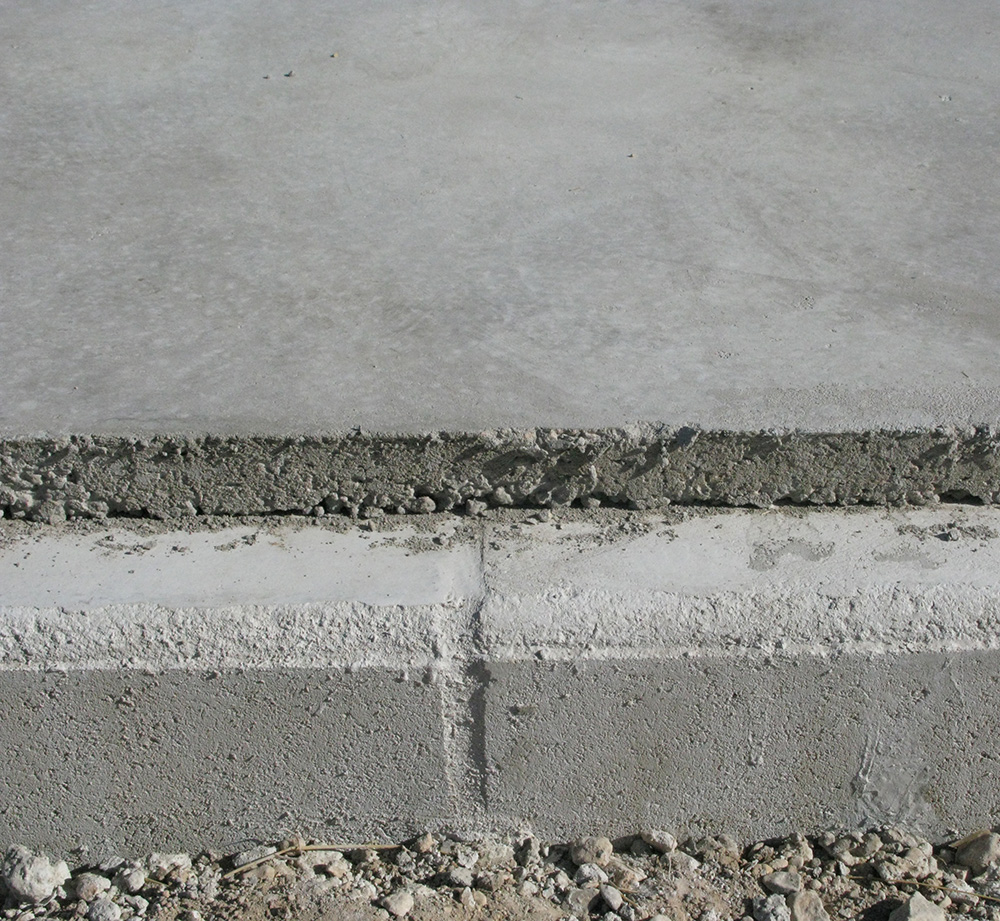
It is important that, in case there are any sinkholes in the surface, they are checked and cleaned and marked before starting.
On hard surfaces, such as terrazzo or concrete, we recommend the installation of an elastic and draining underlayment, as it will help water drain faster when heavy downpours occur. They also provide a softer and more comfortable footing.
- Presentation of the turf
Before laying out the lawn, it is important that you make a sketch of how you are going to distribute the pieces in order to have the minimum possible waste of lawn.
To do so, take into account the following aspects:
- The grass rolls are 2 meters wide.
- The artificial turf pile is flawed in the direction of rolling, so you have to lay all the pieces in the same direction, so that the entire surface is uniform in color and the joints are not marked.
Spread the turf over the surface to be covered with pieces of 2 m. wide by the length you need. It is recommended that you give each piece about 5 cm. extra at each end so that the grass molds better to the surface, and that you adjust the perimeter once the installation is finished.
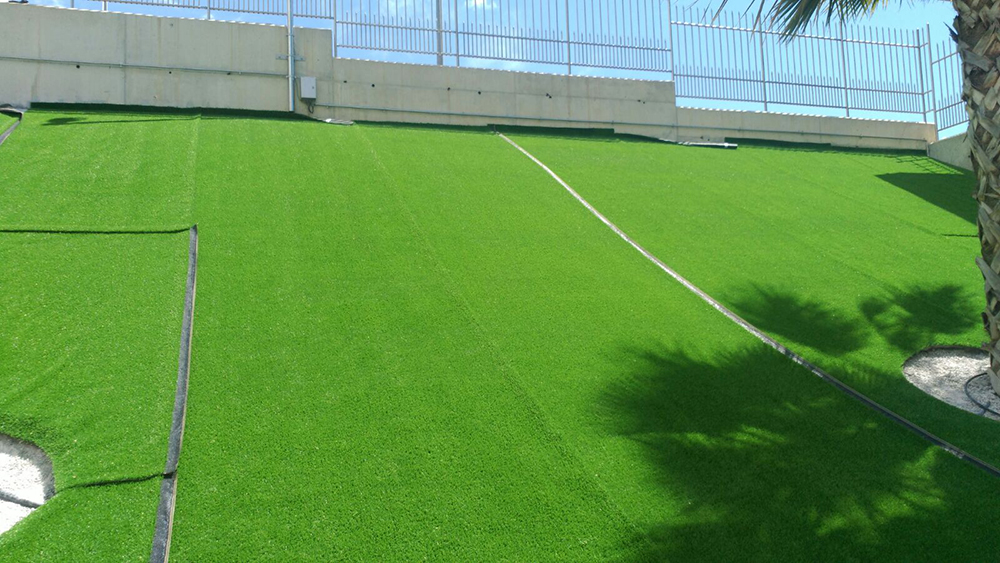
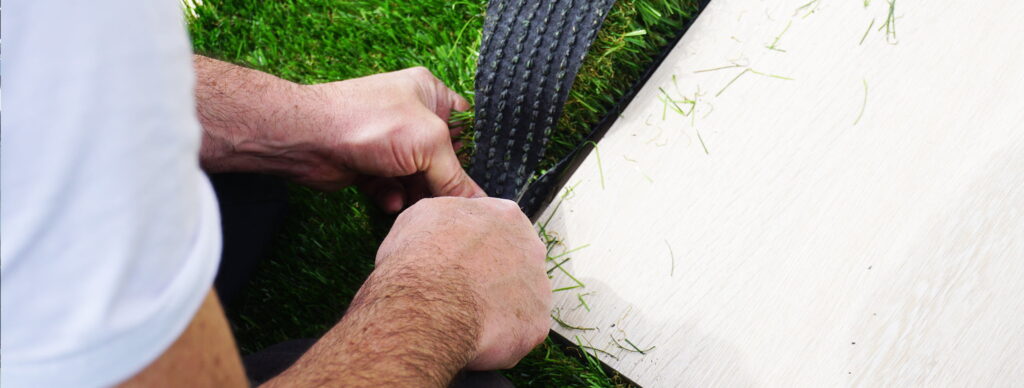
One of the keys to a good installation is that the joints are not visible, so you have to be very careful at this point, cleaning the sides of the joint between the two pieces with the stitches and leaving, at most, a couple of millimeters of separation between the pieces.
- Gluing
Now that you have the entire surface covered with artificial turf, it’s time to attach the pieces of artificial turf to each other.
For that you have to open the joints on both sides and spread the joint band. Spread the PU glue over the entire strip and spread it with a notched trowel. Then closes the joints, making sure that the grass does not get dirty with glue.
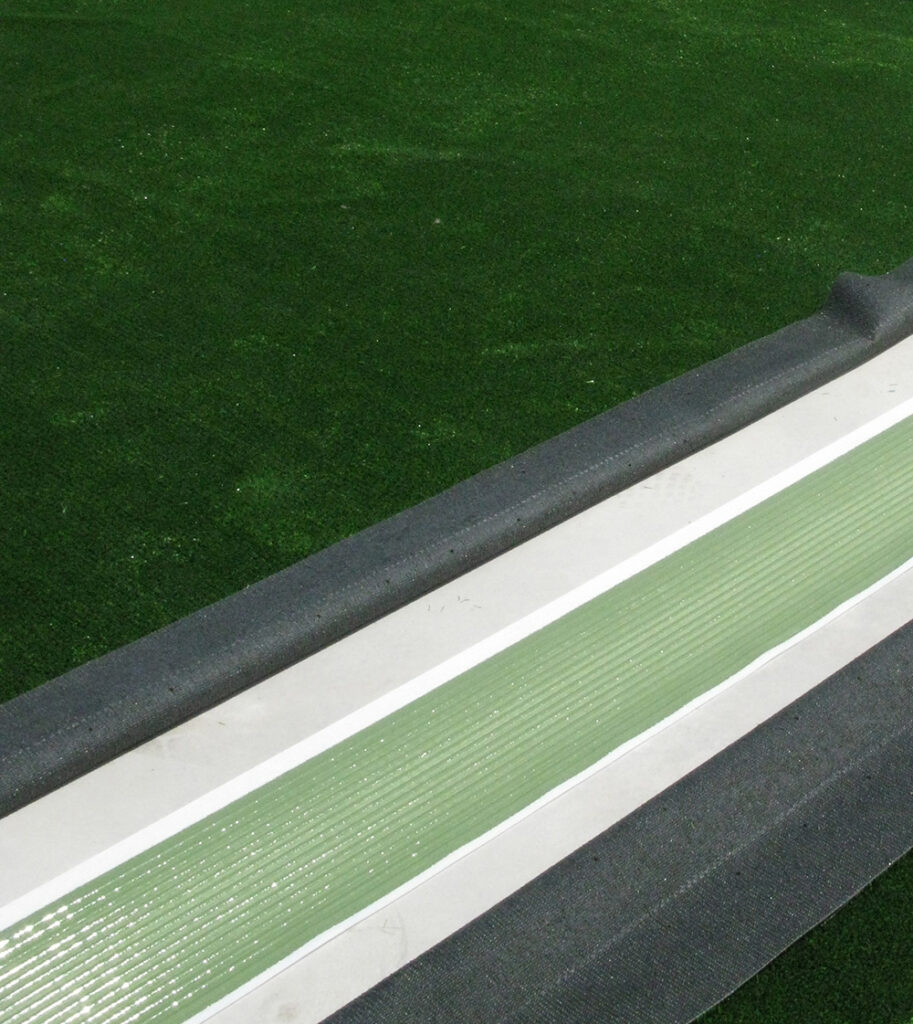
There is another alternative to glue, the self-adhesive band. As its name indicates, it is a strip that already has an adhesive incorporated. In this case, once the joints are open and the self-adhesive strip is extended, you would have to remove the plastic tape covering the adhesive and close the joints.
When the glue has hardened (between 30 min. and 2 hours after spreading, depending on the ambient temperature), we recommend that you fix the perimeter with dots and a bead of PU glue (there are PU glue cartridges that facilitate this process), always respecting the water outlets to avoid puddles.
Once you have fixed the perimeter you can adjust it by trimming the excess.
- Sand filling and brushing
With the artificial turf already in place and glued, it is time to brush and fill with silicasand .
For a turf with curly infill fibers we recommend to spread evenly 5 kg/m2. Although many people speak of unfilled turf models, meaning that they do not need silica sand, we recommend that you infill the turf with silica sand as it has many advantages for later use and for the durability of the installation.
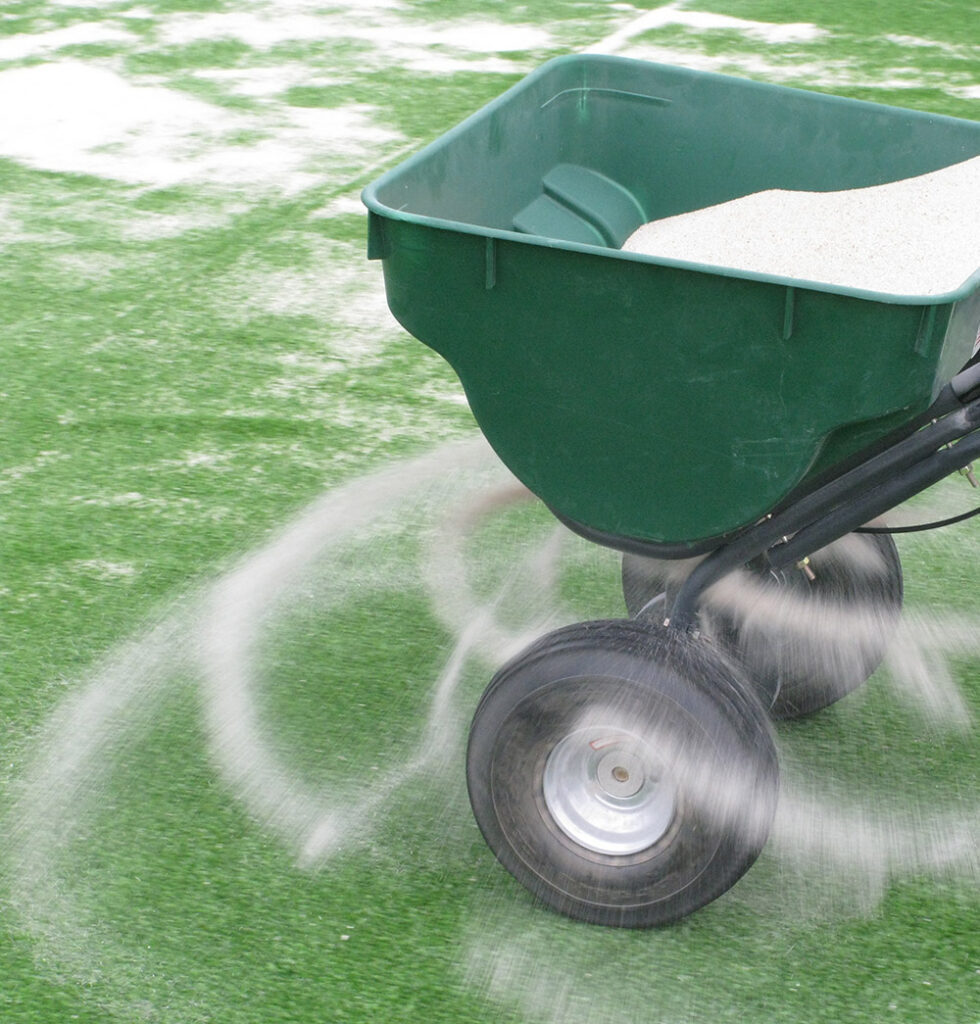
Once you have spread the silica sand, brush again so that the sand penetrates well and to lift the hair well.
Finally, spray a little water over the entire surface to remove any remaining dust.
As you can see, you don’t need a master’s degree to install artificial turf yourself.
However, we only recommend that you do it yourself if it is a small area, maximum 15-20m2.
For larger surfaces we recommend that the installation be done by a professional, as he has the experience and the right tools to ensure that your lawn is perfectly installed and to guarantee its durability.
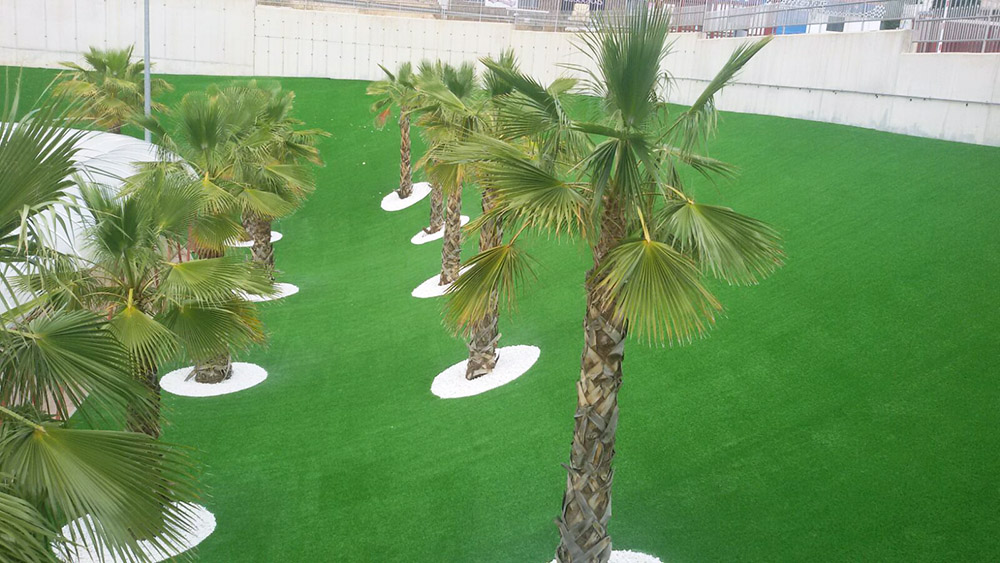
If you crunch the numbers you will see that on these larger surfaces the professional actually saves you money because of the installation time involved and the guaranteed longer life and better results you will have.
Now that you know how to install it, all you have to do is choose a good artificial grass.