
Artificial Sports Turf: Performance and Durability for Sports Venues
Sports artificial turf is one of the most popular solutions in the world of sports, especially for the creation of fields and courts for soccer, tennis, field hockey and other outdoor sports. Designed to offer high performance, durability and ease of maintenance, sports artificial turf is optimized to withstand the demands of sports activities, providing a safe and quality playing field.
What is artificial sports turf?
Artificial sports turf is a specially designed variant of synthetic turf, which is used on sports fields and courts. Unlike traditional artificial turf, this type of turf is made of tougher and more durable fibers, capable of withstanding intensive use, extreme weather changes and wear and tear caused by players. In addition, it is designed to offer the ideal traction, rebound and shock absorption characteristics that sports require.
Benefits of artificial sports turf
- High performance and traction: Sports artificial turf is designed to provide excellent traction and cushioning, allowing players to slide in a controlled and safe manner. This is essential to prevent injuries and to keep in-game performance unaffected, even in wet or rainy conditions.
- Durability and wear resistance: Unlike natural grass, which can wear out quickly due to intensive use, artificial sports turf is highly resistant to wear and tear and maintains its appearance and functionality for years, even under frequent playing conditions.
- Low maintenance: Artificial sports turf does not require watering, mowing or fertilization, which significantly reduces maintenance costs and allows fields to be available for play year-round, regardless of the weather. This makes it a popular choice for commercial and professional sports facilities.
- Adaptability to different sports: Artificial sports turf is available in different types, adapted for various sports, such as soccer, field hockey, tennis and rugby. These types of turf are designed with different characteristics in terms of the height and density of the fibers, allowing each sport to have the most suitable surface for its performance.
- Water savings: By not requiring constant watering, artificial sports turf contributes to water conservation, making it a more sustainable option compared to natural grass.
- Consistent playing conditions: Sports artificial turf maintains its consistency and playing characteristics year-round, unaffected by the weather. Whether it’s summer, winter, rain or shine, the turf always provides a stable and predictable surface for players.
Common uses of artificial sports turf
Sports artificial turf is widely used in a variety of sports facilities, such as:
- Soccer fields: Artificial turf is a popular choice for both professional and amateur soccer fields, as it offers a wear-resistant surface that is ideal for withstanding the intensity of play and adverse weather conditions. It also allows matches to be played even after heavy rains, as it drains water quickly.
- Tennis courts: In tennis courts, artificial turf is used to create durable, low-maintenance surfaces. This type of turf has a texture that offers a controlled bounce, similar to that of a natural grass court, but without the associated maintenance issues.
- Field field hockey fields: Artificial turf is also used in field hockey fields, where the characteristics of the material allow the ball to travel in a controlled manner. In addition, these fields are designed to be resistant to wear and tear of sticks and aggressive play.
- Rugby pitches and other contact sports: Synthetic sports turf is perfect for contact sports, such as rugby, as it offers excellent shock absorption and provides a safe surface for players. In addition, because it is more resilient than natural grass, it does not degrade quickly due to physical impacts.
- Training areas: It is also used in training areas, where players practice various skills and exercises. Artificial turf allows for continuous training without the quality of the field being affected by frequent use.
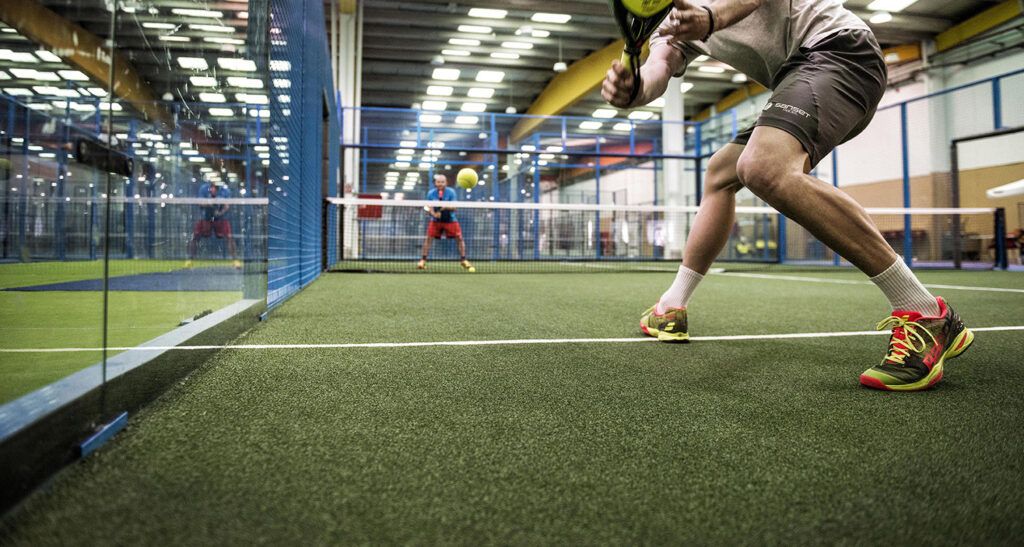
Characteristics of artificial sports turf
Sports artificial turf is manufactured with specific technical characteristics to ensure optimal performance. Some of these features include:
- High-quality fibers: Sports turf fibers are usually made of polyethylene or polypropylene, materials that are highly resistant to friction damage and wear, which increases the field’s durability.
- Proper support and drainage: The sports turf is installed on a base that includes a drainage layer, which allows water to drain quickly and prevents puddles from accumulating. This ensures that players can continue to play, even in rainy conditions.
- Infill system: Depending on the sport, artificial sports turf may be infilled with materials such as sand or rubber, which helps provide stability and cushioning to the surface. This infill also improves traction and playing conditions.
- Controlled surface: The height and density of the fibers vary depending on the type of sport. For example, for soccer, the fibers are generally longer and denser, while for other sports, such as tennis or field hockey, the turf has a different structure to suit the specific needs of the game.
How is artificial sports turf installed?
The installation of artificial sports turf requires proper site preparation and the use of high quality materials. The general process includes:
- Site Preparation: The area should be properly leveled and compacted to ensure that the base is firm and stable.
- Base course installation: A layer of material such as gravel or sand is placed to ensure proper drainage and provide support for the fibers.
- Laying the turf: The artificial turf is cut and laid in the area, and fixed with special adhesives or turf nails to prevent it from slipping.
- Infill: Depending on the type of turf, a sand or rubber infill is added to improve traction and shock absorption.
- Maintenance: Although low maintenance, it is recommended to perform periodic tasks such as brushing the fibers, removing debris and checking that the drainage is working properly.
Conclusion
Artificial sports turf offers an excellent solution for those looking for a durable, low-maintenance playing field with consistent performance. From soccer fields to tennis or field hockey courts, this type of turf provides the necessary characteristics for safe, high quality play. Its resistance to wear and tear, its adaptability to different sports and its ability to maintain optimal playing conditions throughout the year make it a preferred choice in sports facilities around the world.


