
Polypropylene: A Versatile Choice in Artificial Turf
Polypropylene is another common material in artificial turf manufacturing, known for its light weight, moisture resistance and low cost. Although it does not offer the same softness or durability as polyethylene or nylon, polypropylene remains a popular choice for specific applications where economy and functionality are priorities.
What is polypropylene?
Polypropylene is a petroleum-derived thermoplastic polymer widely used in various industries. In artificial turf, it is mainly used for the manufacture of fibers and secondary bases, due to its resistance to water and its ability to withstand extreme temperatures.
Advantages of polypropylene artificial turf
- Economic:
- It is more affordable compared to other materials such as nylon or polyethylene, making it an ideal choice for projects with tight budgets.
- Lightweight and easy to handle:
- Its light weight facilitates transport and installation.
- Moisture resistant:
- It does not absorb water, which makes it suitable for areas with high exposure to liquids.
- Variety of uses:
- Used in both fibers and structural elements of artificial turf.
Limitations of polypropylene in artificial turf
- Less softness:
- Polypropylene fibers are stiffer, which may be less comfortable for recreational or residential uses.
- Limited durability:
- It has lower resistance to heavy traffic and frequent wear and tear, making it less suitable for high traffic areas.
- Less natural appearance:
- Compared to polyethylene, it may have a less realistic finish.
Common uses for polypropylene artificial turf
- Decorative zones:
- Ideal for areas where the lawn will not be walked on frequently, such as vertical gardens or ornamental spaces.
- Temporary events:
- Perfect for ephemeral applications, such as exhibitions or fairs, due to its low cost and ease of installation.
- Projects with tight budget:
- A practical option for those looking for basic functionality without investing too much.
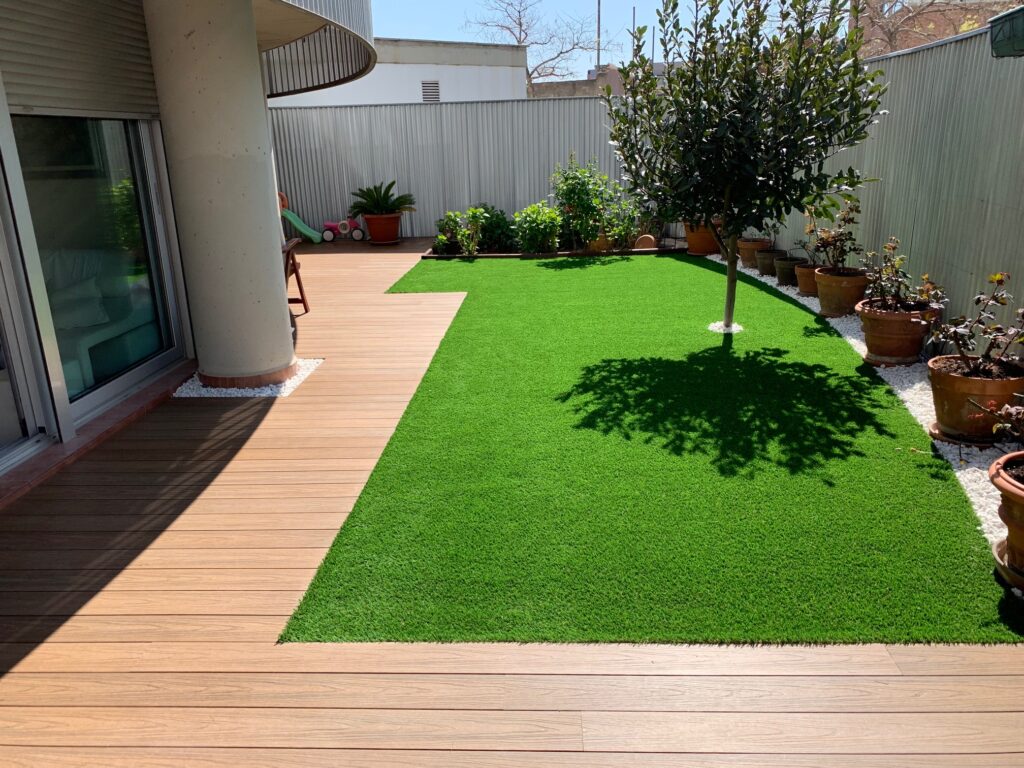
Polypropylene artificial turf maintenance
- Regular cleaning:
Removes leaves, dust and other debris to maintain its appearance. - Occasional brushing:
Although polypropylene has less flexibility to regain its shape, light brushing can improve its appearance. - Avoid heavy traffic:
To prolong its life, use this type of turf in low-use areas.
Conclusion
Polypropylene is an economical and practical choice for artificial turf in decorative or low-use applications. Although it lacks the softness and durability of materials such as polyethylene or nylon, its moisture resistance and low cost make it an ideal alternative for specific projects.


