Tennis tournaments around the world are played on different surfaces, each with its own characteristics that have a different impact on the game. The four most common types of tennis courts are: hard (concrete or asphalt), clay, grass and synthetic. Of the four Grand Slam tournaments, the US Open and Australian Open are played on hard courts, Roland Garros (French Open) on clay and Wimbledon on grass courts.
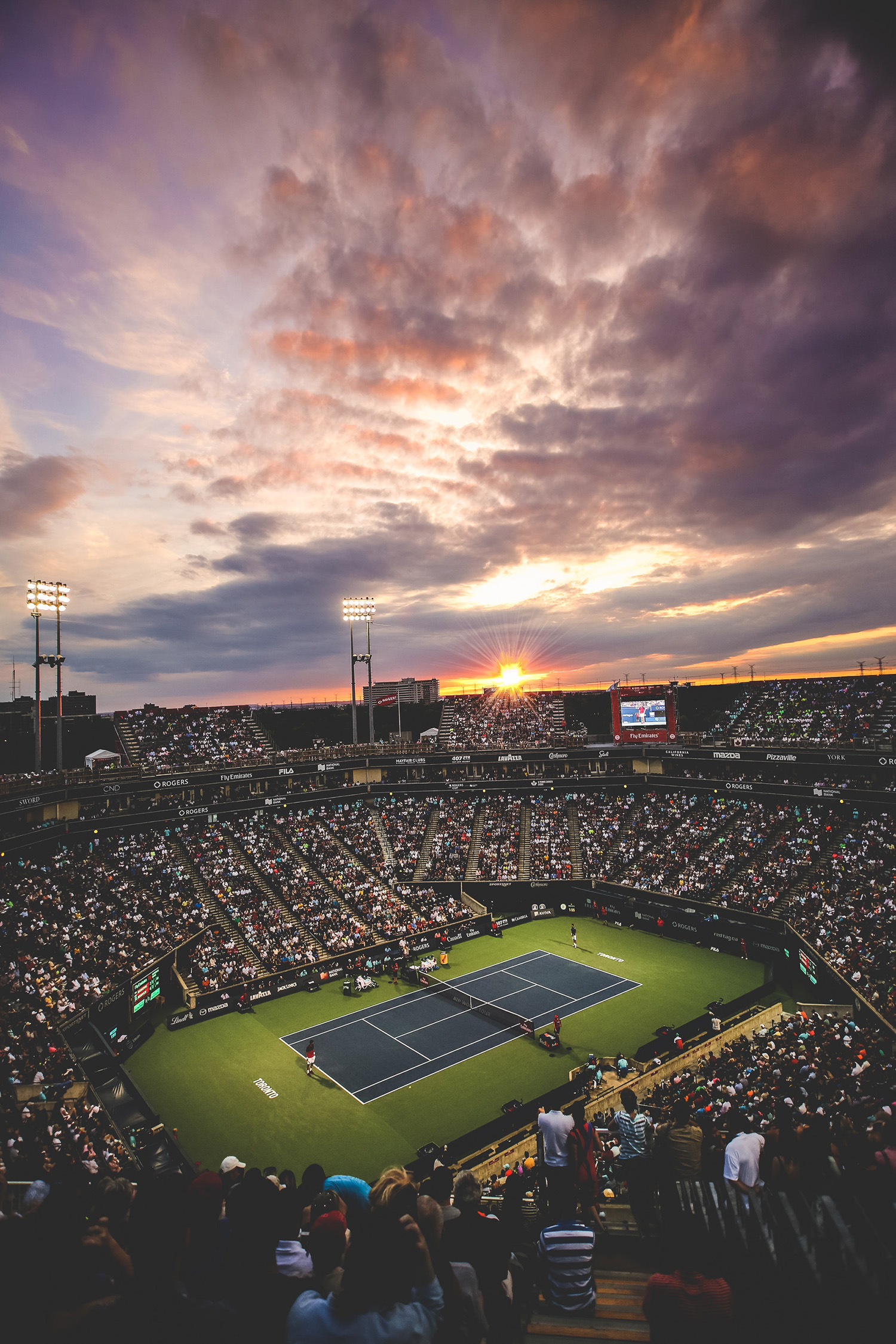
Different surfaces and terrain will affect the way the match is played, which means that players will always have their own preferred surface. Below, we explain the main characteristics of the four most common tennis courts and what impact they have on the game.
HARD TRACK
Hard tennis courts are the most common courts, which you will usually find at your school, sports center or tennis club. These courts consist of a hard base substance, such as concrete or asphalt, which is then covered with a layer of acrylic surface. Each hard floor can vary considerably depending on the different materials used.
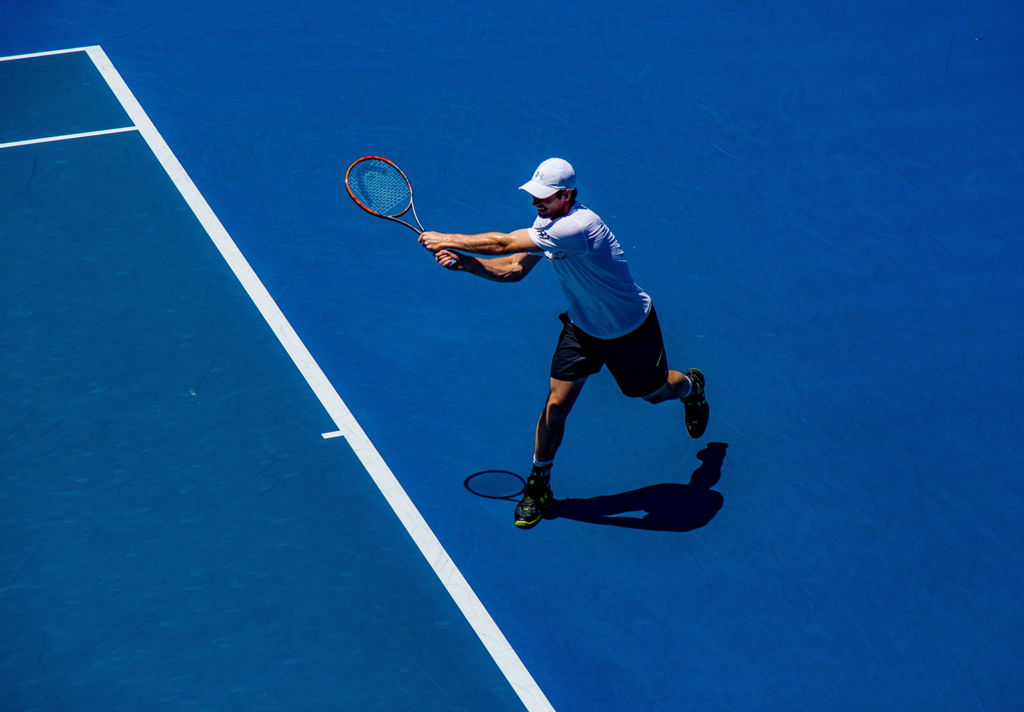
Hard court is often considered an average terrain, as it is faster than a clay court, but slower than a grass court. In other words, players who prefer a fast game will likely get better results when playing on a hard court. In addition, hard courts reduce the amount of contortion in the flight and trajectory of the ball while producing a bounce midway between a clay and grass court.
Traditionally, hard courts are often very stiff, which can take a toll on the player’s body, especially the joints. To remedy this, manufacturers have developed new ways to increase shock absorption, so that they produce less stress on the body. There are already examples that, using different layers, form a resistant base that absorbs impacts and reduces muscle fatigue.
CLAY COURT
Clay courts are created from shale, stone or crushed brick and are popularly known for being a slower playing surface. Amateur players are less likely to encounter these types of courts due to the high level of maintenance and water required to keep them in top condition.
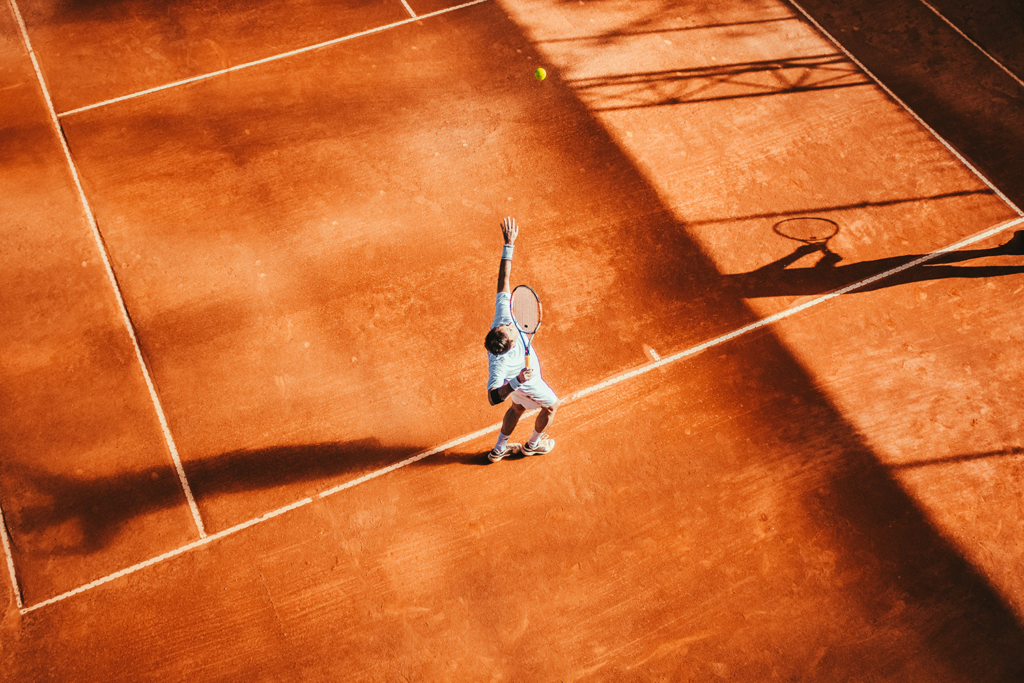
There are two types of clay courts: red clay and green clay.
In turn, there are two types of red clay track: American red clay (deep burgundy red) made from red stone dust and brick dust; and European red clay (red/orange color), typically from Italian or Spanish crushed bricks.
The Roland Garros uses five layers of material (80 cm in total or 31 inches) with a thin layer of terracotta brick dust on top.
This type of surface is widely used on tennis courts, along with hard courts, because they require less maintenance than grass courts.
Clay courts are the slowest of all surfaces, the bounce of the ball is also much slower than on other courts and, to top it off, it reaches a greater height. The points are longer and this causes players to tire more quickly.
Play on this type of terrain is more strategic, like a chess match. Players who rely on their serve to win more points will generally have trouble getting up as the surface eliminates many of the benefits of a fast serve. All-terrain baseline players will generally perform better on the clay court.
For most players, dirt surfaces put less wear and tear on the ankle, knee and hip joints because they naturally absorb shock and offer less traction. The reduced traction allows the layers to slide on the court, which is the main reason why distance players generally play better on these courts, while players who are less accustomed to the surface may struggle.
GRASS TRACK
Grass courts were originally the most common type of tennis court, but this changed due to the high level of maintenance and cost. In addition, bad weather conditions have a more adverse effect on these courts than on hard or clay courts. Grass courts must be cut very short and the soil must be well compacted.
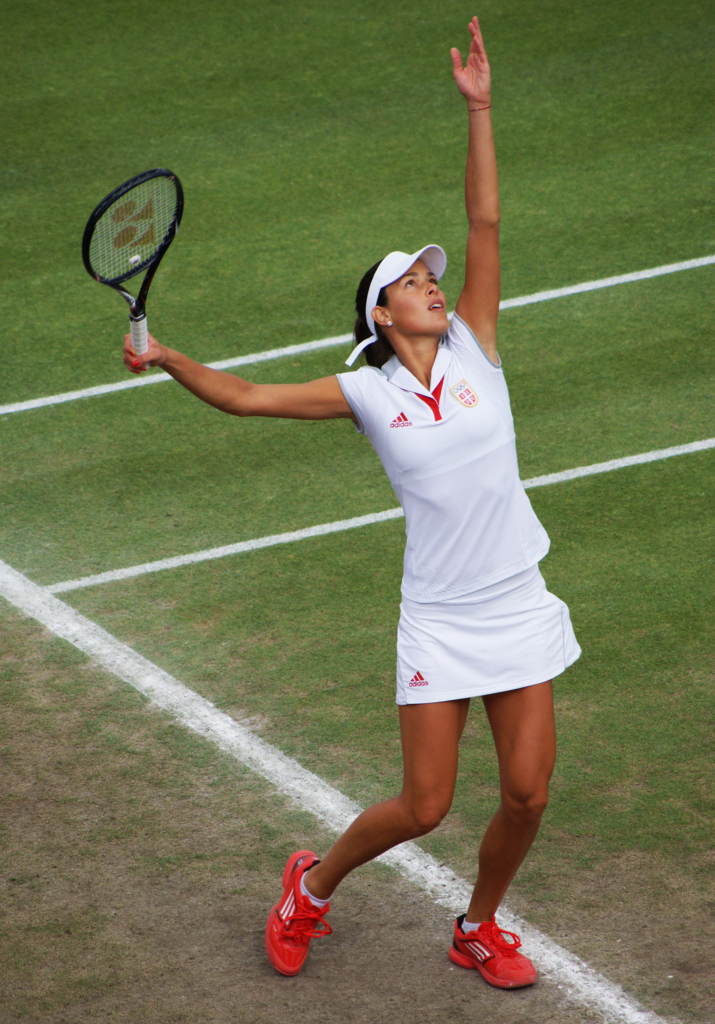
Compared to clay and hard courts, grass courts are much faster and have a lower bounce capacity. Rallies are generally much shorter, which means that players who possess a good serve as a weapon generally benefit greatly on this type of court, as well as those who continually attack the net.
SYNTHETIC (OR ARTIFICIAL TURF) COURTS
Synthetic courts can be made from different materials, such as artificial turf and hard rubber, which means that the surface can vary greatly from field to field. This term also often refers to any removable court surface that is often installed for temporary events but is no longer used for professional events.
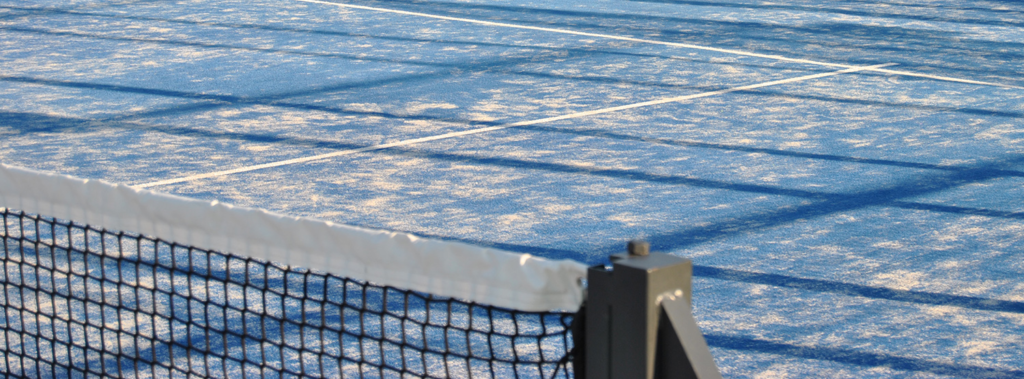
In general, this type of surface offers a faster game than hard courts and gives a weak rebound. There is a factor that is the “buoyancy” of the ball, which provides an advantage to players who base their shots alternating lifts with flat and aggressive shots. A type of game similar to what would be used on a hard court, a good serve that solves much of the point and then get to scratch a lot of winning shots. Therefore, it is better to base the strategy on the lateral movement of your opponent with flat and topspin shots and go up to finish off the net with volleys.
Tennis courts with artificial turf surface are the best option for areas subject to short and heavy rains. Thanks to the drainage capacity of this type of surface, it allows play to continue even if it is raining.
THE CHOICE OF PLAYERS
Each player will have a preference for the type of court, as different surfaces give an advantage to different playing styles. Rafael Nadal has always been considered the “king of clay”, while Roger Federer generally prefers grass courts.
Obviously, players will always be more favored on one surface, but the best players can adapt their game to ensure a good match regardless of the type of court. Being able to perform well on all surfaces is what distinguishes the best from the rest.