
Artificial Turf Density: Key to Quality and Comfort
The density of artificial turf is a determining factor in its quality, appearance and functionality. It refers to the number of fibers (or filaments) found in one square meter of turf. A higher density indicates that the turf is composed of more filaments, which usually translates into a softer texture, a more natural look and greater resistance to wear and tear.
What is the?
The density of artificial turf is measured in stitches per square meter, which represents the number of filaments woven at the base of the turf in a specific area. The thickness and type of fiber is also taken into account to determine how the filaments are distributed.
A higher density provides a lusher, more natural appearance, while a lower density may be suitable for decorative applications or low-traffic areas where less strength is needed.
Importance of density in artificial turf
- Natural look: High density turf better mimics natural grass due to its more uniform and complete coverage.
- Greater resistance: A denser turf is more resistant to frequent traffic, such as in family gardens, playgrounds or sports areas.
- Comfort: The density directly affects the softness of the turf, making it more comfortable for barefoot walking, playing or relaxing.
- Durability: Because it is composed of more fibers, dense turf is more durable and retains its original appearance longer, even under heavy use.
- Reduced filler effect: In dense models, the amount of filler material (such as silica sand) required may be less, as the fibers provide more coverage on their own.
Types of artificial turf according to density
- Low density:
- Between 10,000 and 15,000 stitches/m².
- Suitable for temporary decorations, low traffic areas or specific uses where natural appearance is not a priority.
- Average density:
- Between 15,000 and 18,000 stitches/m².
- Ideal for residential gardens and spaces of moderate use. Offers a balance between aesthetics, comfort and cost.
- High density:
- More than 18,000 stitches/m².
- Perfect for high traffic areas such as schoolyards, sports fields or public gardens. Provides a premium finish and superior strength.
How to choose the right density?
Choosing the density of artificial turf depends on the intended use and the specific needs of the space:
- High traffic areas: If the turf will be used intensively, such as in gardens with children or pets, a high density is essential to ensure durability and resistance.
- Sports applications: On soccer, paddle or golf courts, the high density ensures optimum performance and increased wear resistance.
- Decorative spaces: For terraces, balconies or green walls, a medium or low density may be sufficient, depending on the budget and the desired visual effect.
- Comfort and aesthetics: If you are looking for a soft, natural-looking turf, opt for high-density models.
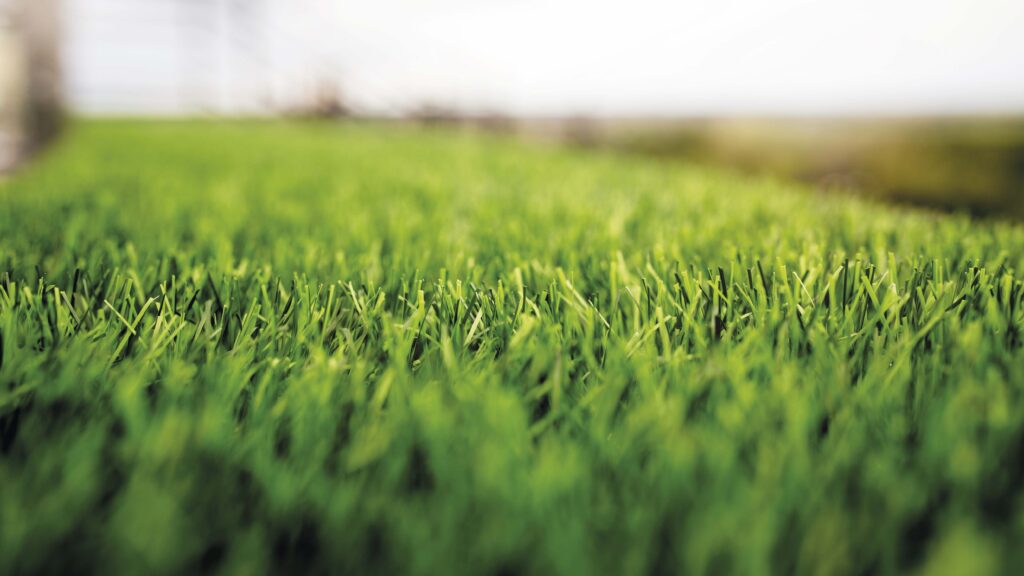
Benefits of high density artificial turf
- Uniform coverage: With more filaments per square meter, voids are virtually non-existent, ensuring a more attractive finish.
- Reduced wear: Dense filaments withstand continuous use better, reducing the risk of crushing and volume loss.
- Greater versatility: This type of turf is ideal for residential, sports and commercial applications.
Relationship between density and other artificial turf factors
Artificial turf density should not be considered in isolation, as it interacts with other important factors such as:
- Fiber height: A turf with high fibers and low density may appear less lush than one with shorter fibers but higher density.
- Fiber material: The type of fiber influences the strength, softness and appearance of the turf.
- Infill: Density also affects the amount of infill material needed to maintain turf stability and support.
Maintenance
- High density: Easier to clean and maintain, as the fibers better protect the floor from dirt accumulation. However, it may require regular brushing to keep the fibers upright.
- Low density: Needs additional padding and care to prevent the fibers from wearing out quickly or losing their appearance.
Conclusion
The density of artificial turf is a key factor in determining its quality, durability and functionality. Choosing the right density ensures that the turf meets your aesthetic and practical expectations, providing a long-lasting green space that is easy to maintain.


